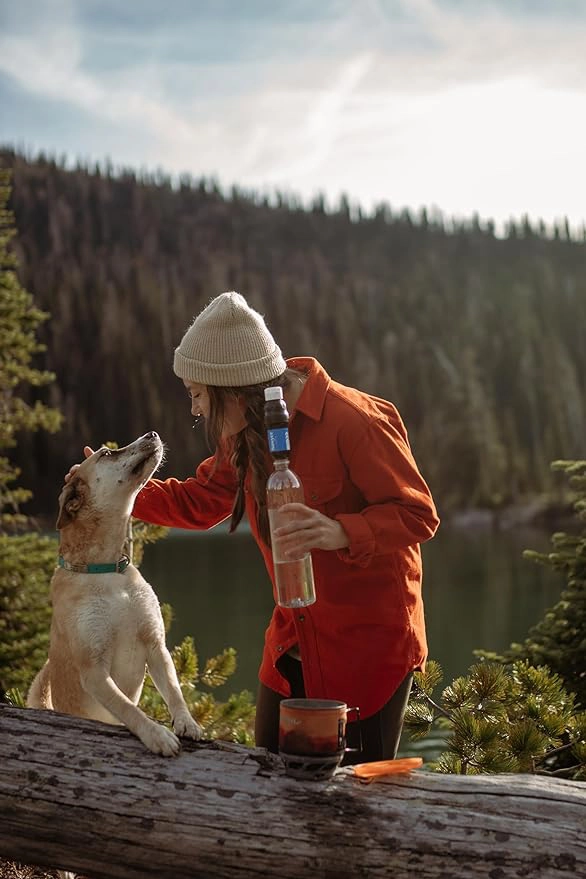

If you are looking for an honest Sawyer Squeeze review, you’ve likely seen this “Appalachian Workhorse” hanging off the packs of nearly every thru-hiker in the Blue Ridge Mountains. But in the Southeast, where our water sources can range from pristine mountain springs to silty Piedmont creeks, this “gold standard” requires a specific set of skills to keep it running.
Why It’s the Standard
At only 3 ounces, the Squeeze offers a versatility that’s hard to beat. You can use it as a squeeze bag system, an inline filter for your hydration bladder, or even a gravity system for camp. Its 0.1-micron hollow fiber membrane removes 99.99999% of bacteria and protozoa. ). This is precisely what you need when pulling water from high-traffic sources in the Smokies.
What’s in the Sawyer Squeeze Kit?
When you purchase the whole system, you aren’t just getting the filter. The standard kit typically includes:
- The Squeeze Filter: The core 0.1-micron unit.
- Two 32-oz Squeeze Pouches: Collapsible bags for “dirty” water.
- Cleaning Syringe: The essential tool for field back-flushing.
- Inline Adapters: Used to connect the filter directly to your hydration bladder hose.
The Southeastern Challenge: The Clog
The Achilles’ heel of the Sawyer in the South is our sediment. Unlike the clear, rocky runoff of the High Sierra, Southern water often carries fine silt and organic “tea” tannins.
If you don’t back-flush frequently, your flow rate will drop to a painful drip. In the humid heat of a Georgia summer, the last thing you want is to spend 20 minutes wrestling a bag just to get a liter of water.
Pro-Tip for Tannins: If you are filtering “tea-colored” water, the Squeeze will remove the bacteria, but it will not remove the color or the taste. Many hikers carry a secondary carbon filter to improve the flavor of their backpacking water filters in the Southeast. (Internal Link: Link “backpacking water filters Southeast” to another gear post on your site).
Maintenance Tips for Skilled Outdoorsmen
- The Plunger is Non-Negotiable: Carry the cleaning syringe and back-flush every 5 liters.
- Field Hack: If you lose the plunger, use a sport-top bottle cap to force clean water back through the filter.
- Prevent Freezing: Sleep with your filter in your quilt during shoulder season to prevent internal damage.
Off-Season Deep Cleaning and Storage
A critical part of any Sawyer Squeeze review is longevity. If you store your filter with tap water inside, calcium deposits can “cement” the fibers shut.
- Vinegar Soak: If your flow is slow after storage, soak the filter in white vinegar for 30 minutes to dissolve mineral buildup.
- Bleach Sanitization: Before long-term storage, run a weak bleach solution through the filter to prevent mold growth.
- Dry Thoroughly: Allow the filter to air dry completely before packing it away.
Sawyer Squeeze vs. Sawyer Mini: Which is Best?
While the Mini is lighter, this Sawyer Squeeze review recommends the full-sized model for the AT:
- Flow Rate: The Squeeze filters a liter in 30–45 seconds; the Mini often takes twice as long.
- Clog Resistance: The Squeeze handles silty Southern water much better than the smaller Mini.
- Longevity: The Squeeze is rated for 100,000 gallons, outlasting almost every competitor.
Sawyer Squeeze Review: Frequently Asked Questions
- How long does it last? It is rated for 100,000 gallons.
- Is it better than the Katadyn BeFree? The Squeeze is more durable and more affordable over time.
- Does it filter viruses? No, it removes bacteria and protozoa but not viruses.
Verdict
To conclude this Sawyer Squeeze review, this remains the best all-around choice for the weight-conscious hiker. Provided you are disciplined enough to maintain and store it properly, it will be the only filter you need for years to come. This is truly the best water filter for AT hikers who want a balance of weight and reliability.
While the Squeeze is my top pick for the AT, you can see how it stacks up against other options in our full guide to the best water filtration devices.